
Key Takeaways
- Continuous performance improvement empowers leaders and teams to adapt, learn, and thrive in changing environments.
- Effective team development relies on actionable feedback, transparent goals, and an openness to learning from setbacks.
In today’s fast-evolving workplaces, leaders are called to guide teams through continuous shifts in goals, technologies, and expectations. Applying continuous performance improvement isn’t just about achieving better results; it’s about embedding a mindset of ongoing growth, reflection, and adaptability throughout your leadership and team practices.
What Is Continuous Performance Improvement?
Origins and Key Principles
Continuous performance improvement is rooted in methodologies such as Total Quality Management and Lean, emphasizing an ongoing cycle of assessment, feedback, and adjustment. The central principle is incremental progress—where teams and leaders regularly evaluate processes, identify small opportunities for enhancement, and act on them. This approach values adaptation over perfection and supports collaboration amongst team members at all levels.
How It Applies to Leadership
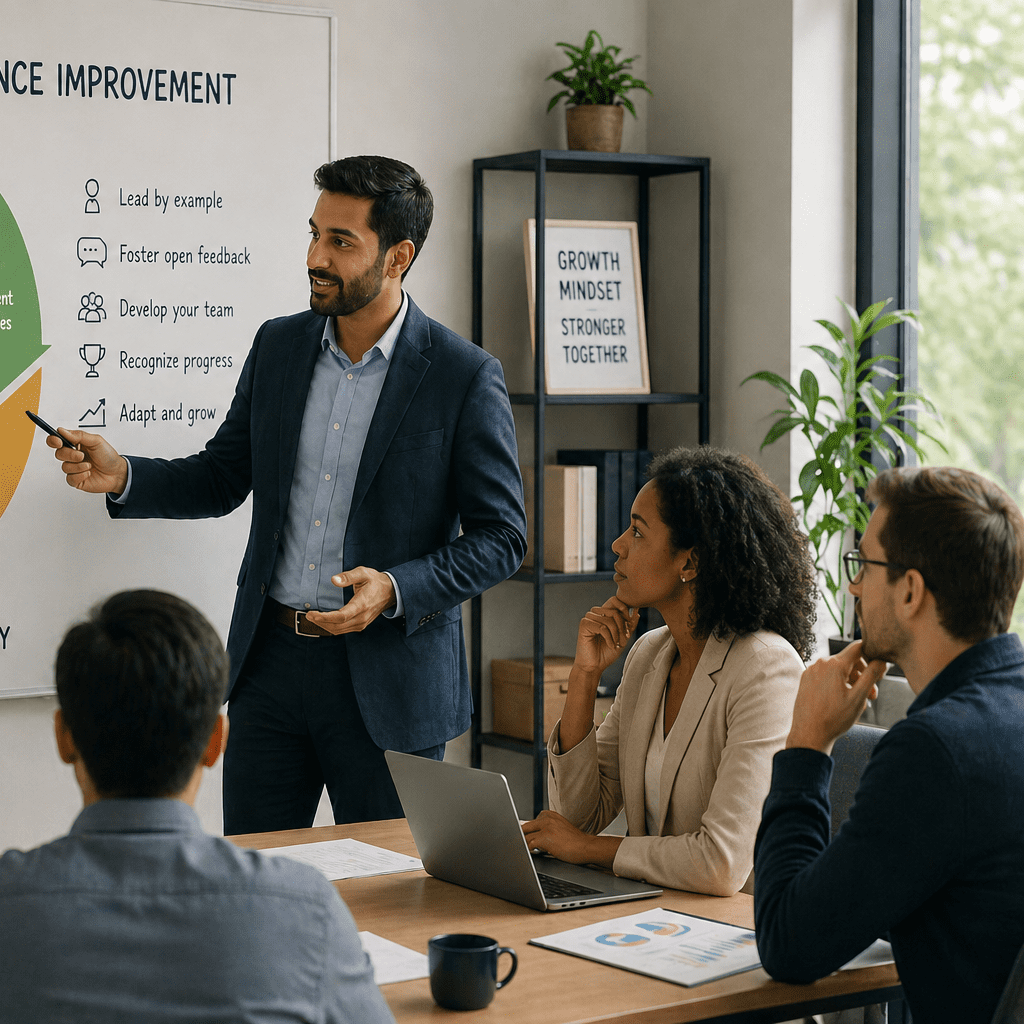
In leadership, continuous improvement means consistently seeking ways to enhance not just individual performance but also team effectiveness. Leaders model adaptability by inviting input, learning from experience, and thinking critically about workflows. By applying these principles, you demonstrate a commitment to both personal growth and to creating an environment in which your team can excel.
Why Is Ongoing Improvement Important?
Benefits for Team Growth
Emphasizing ongoing improvement helps build a culture where teams are empowered to learn, innovate, and take calculated risks. This can boost morale and foster a sense of ownership over outcomes. When continuous improvement is embedded in daily practices, teams generally experience greater adaptability, resilience, and an enhanced ability to meet changing organizational or market demands.
Challenges With Static Approaches
Teams that rely on static or one-time approaches risk becoming stagnant. Without regular review and adaptation, processes may become outdated or inefficient, and opportunities for skill development can decline. Leadership that resists change may inadvertently discourage initiative, resulting in decreased engagement and performance over time.
How Do Leaders Foster Improvement?
Regular Feedback and Reflection
Leaders can create momentum by building feedback loops into standard workflows. This may involve scheduled check-ins, post-project reviews, or informal conversations that encourage honest input. Reflection isn’t limited to evaluating outcomes; it’s about considering both what worked well and what could be adjusted for next time. This practice helps teams spot patterns, learn from mistakes, and share best practices more effectively.
Encouraging Open Communication
Ensuring every team member feels heard is essential in a culture of ongoing improvement. Leaders achieve this by being approachable, soliciting diverse perspectives, and creating space for constructive dialogue. When communication is open and bidirectional, it becomes easier to identify blind spots, surface new solutions, and align around shared goals.
Steps for Implementing Continuous Improvement
Step 1: Set Clear Goals
Start by defining specific, measurable objectives for both individual and team performance. Clear targets support focused improvement, guiding where to direct efforts and how to measure progress. These goals should be transparent and revisited regularly to reflect priorities in real time.
Step 2: Monitor Progress Consistently
Use regular check-ins, status updates, or data-driven performance indicators to track advancement toward goals. Simple tools—such as dashboards, meeting notes, or progress trackers—keep team members informed and engaged. Monitoring is not about policing work, but empowering everyone to spot trends early and respond proactively.
Step 3: Adjust Strategies as Needed
Continuous performance improvement relies on flexibility. As results come in, leaders should be ready to recalibrate strategies and resources. This may mean shifting workloads, introducing new technologies, or providing targeted training. Encourage your team to participate in these adjustments, reinforcing the shared ownership of outcomes.
What Tools Support Team Development?
Common Approaches and Models
Several models can support your ongoing improvement efforts. The Plan-Do-Check-Act (PDCA) cycle, for example, offers a framework for testing changes in a methodical way. Agile project management emphasizes iterative steps and responsive adaptation. Structured feedback systems such as 360-degree reviews can also help surface new insights into team dynamics and leadership strengths.
Selecting the Right Methods
Not every model fits every team. Consider the size, structure, and existing culture when selecting tools or frameworks. Start with approaches that are easy to integrate and adjust over time as your team’s needs evolve. The goal is to support improvement without overwhelming your workflow.
How Can Leaders Address Setbacks?
Learning From Challenges
Setbacks are a natural part of the improvement process. Leaders play a pivotal role in setting the tone for response—viewing mistakes as learning opportunities rather than failures. Encourage your team to analyze challenges together, focusing on root causes and possible solutions instead of assigning blame. This approach transforms setbacks into valuable learning experiences.
Promoting a Growth Mindset
A growth mindset is the belief that skills and abilities can be developed through effort, feedback, and the willingness to try new approaches. Leaders can encourage this by recognizing perseverance, applauding creative solutions, and supporting continuous learning. Over time, teams become more resilient and better equipped to navigate change.
By viewing leadership and team development through the lens of continuous performance improvement, you can foster an environment where progress is ongoing and everyone has a stake in success. With clear goals, open feedback, and adaptive strategies, challenges become stepping stones on the path to excellence.