
Key Takeaways
- Work ethic assessment tools vary in approach and impact—selecting the right one depends on your team’s needs and environment.
- Effective evaluation requires a balance of formal assessments and practical feedback to ensure fair and actionable results.
Assessing work ethic is central to building high-performing teams and maintaining healthy organizational cultures. With several tools and methods available to evaluate work ethic, it’s essential to understand what each offers, how they work, and which will serve your organization or team best. This guide clarifies the main approaches and the strengths and caveats of each.
What Are Work Ethic Assessment Tools?
Defining work ethic assessments
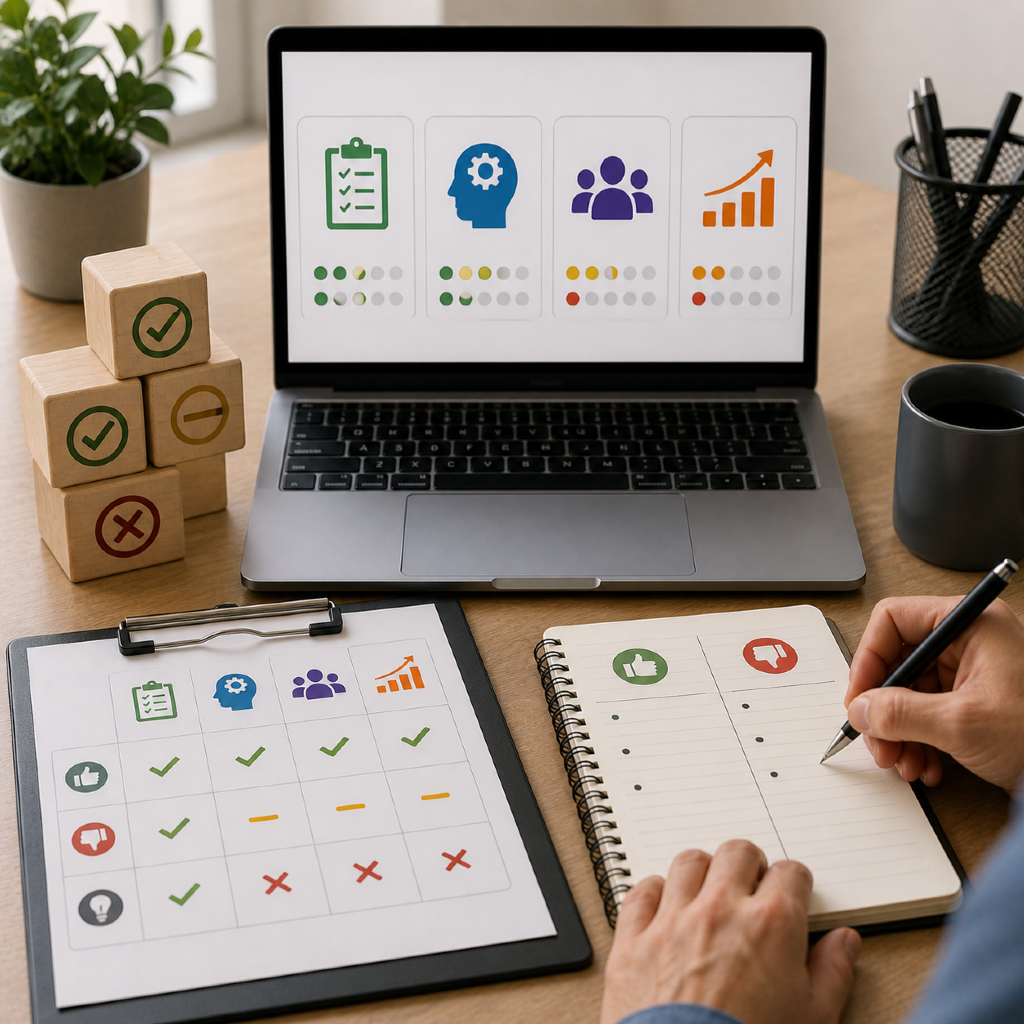
Work ethic assessment tools help you measure qualities such as diligence, responsibility, integrity, and reliability among employees or candidates. Unlike technical skill evaluations, these focus on behaviors and attitudes that indicate how someone approaches their work, deals with challenges, and interacts with colleagues. The goal is to provide structured insights that can guide hiring, development, or team management decisions.
Common formats and methods
Work ethic assessments take many forms, tailored to different settings and roles. You might encounter:
- Self-assessment surveys, where individuals reflect on their own habits and attitudes.
- Peer or manager assessments, which rely on observations from colleagues.
- 360-degree feedback, gathering perspectives from a full circle of team relationships.
- Structured interviews, with targeted questions to explore past behaviors.
- Behavioral inventories or questionnaires, often standardized for broader benchmarking.
These methods can be digital, paper-based, or facilitated by a manager or consultant, depending on your resources and preferences.
How Do These Tools Measure Work Ethic?
Core traits and competencies assessed
At their core, work ethic assessment tools focus on several foundational traits:
- Reliability and punctuality: Does someone consistently meet commitments and deadlines?
- Initiative and self-motivation: Are they proactive in taking on tasks and improving processes?
- Integrity and honesty: Do they adhere to ethical standards and company values?
- Accountability: How do they respond to feedback, take responsibility, and learn from mistakes?
- Teamwork and collaboration: Are they respectful and supportive in group settings?
The aim is to give a multi-faceted view of work behavior, balancing self-perception with external perspectives where possible.
Evaluation techniques and scoring
Most tools use rating scales (e.g., 1–5 or 1–7) to quantify responses, making it easier to compare results or track progress over time. Some assessments add open-ended questions for richer qualitative insights. Scoring may be weighted differently depending on which traits your organization values most. Some tools provide only numerical results, while others include narrative summaries or highlight development areas.
Popular Assessment Tools: Key Features
Self-assessments
Self-assessments invite individuals to reflect on their own attitudes and actions at work. They’re accessible and easy to administer, providing insight into self-awareness and motivation. Common formats include digital questionnaires or paper checklists. Since results are self-reported, these tools work best when paired with other feedback sources.
360-degree feedback tools
These tools collect input from all directions—colleagues, direct reports, managers, and sometimes clients. This comprehensive approach helps identify strengths and improvement areas from diverse viewpoints, reducing single-bias risk. Online platforms have made 360-degree feedback more accessible, though effective use requires clear communication and trust among participants.
Structured interviews and surveys
In structured interviews, you ask each candidate or employee a fixed set of work ethic-related questions, ensuring consistency. Surveys can be customized for team or role-specific needs. These methods help you spot behavioral patterns and ensure comparison across individuals or groups. Digital survey tools can automate analysis, providing aggregate and individual data for review.
Pros and Cons of Different Tools
Strengths of traditional methods
- Self-assessments foster reflection and personal responsibility—valuable for continuous improvement.
- 360-degree feedback gives a full-circle perspective, helpful in complex team environments.
- Structured interviews and surveys provide consistency and rich data for decision-making.
- Most options are scalable, allowing you to adjust the scope as your workforce grows.
Limitations to consider
- Self-assessments may be limited by bias or lack of self-awareness.
- 360-degree feedback can be time-intensive and relies on honest, constructive input from all sources.
- Structured interviews require interviewer training to avoid introducing bias.
- Some tools, especially standardized inventories, may not fit every organization’s culture or priorities without customization.
- Over-reliance on numbers can overlook context and the nuances of human behavior.
Which Assessment Tool Is Right for You?
Factors to consider when choosing
Selecting an assessment tool depends on your goals, team size, company values, and available resources. Ask:
- Are you seeking insight for hiring, promotion, or ongoing development?
- How much time and training can you dedicate to the process?
- Is your workplace open to multi-source feedback, or will a simpler method suffice?
- What specific traits align with your organizational culture?
Rarely does one tool serve every situation. Sometimes a combination of self-reflection and external feedback yields the most balanced results.
Customizing for different teams
Different teams or departments may value particular traits or work styles. You can tailor assessment questions or weightings to fit these contexts. For example, a customer service team may emphasize punctuality and communication, while a product design group may prioritize initiative. Involving team leaders in customizing assessments can increase buy-in and relevance.
Are Work Ethic Assessments Effective?
Interpreting results responsibly
No assessment tool is perfect. Results are informative, not definitive, and should be viewed in context. Use results as conversation starters and opportunities for feedback, not as the sole basis for major decisions. Consider recent changes, external factors, and individual growth trajectories when evaluating outcomes.
Best practices for implementation
For effectiveness, communicate the purpose of assessment tools openly. Ensure anonymity or confidentiality as appropriate, and explain how results will be used. Offer support and guidance for participants, and make follow-up discussions a regular part of team development. Regularly review your process to keep assessments relevant and fair.
Alternatives to Formal Assessment Tools
Observation and feedback loops
Sometimes, direct observation and informal feedback provide valuable insights, especially when paired with ongoing coaching. Regular one-on-ones, peer observations, and open-door feedback policies can highlight work ethic in real time, helping you respond quickly to emerging trends or challenges.
Employee-driven self-improvement
Encouraging employees to set personal development goals and check in regularly builds self-accountability. Workplace learning programs, mentorship, and goal-setting platforms can drive continuous improvement without formal assessments. These paths empower individuals to take ownership of their professional growth.