
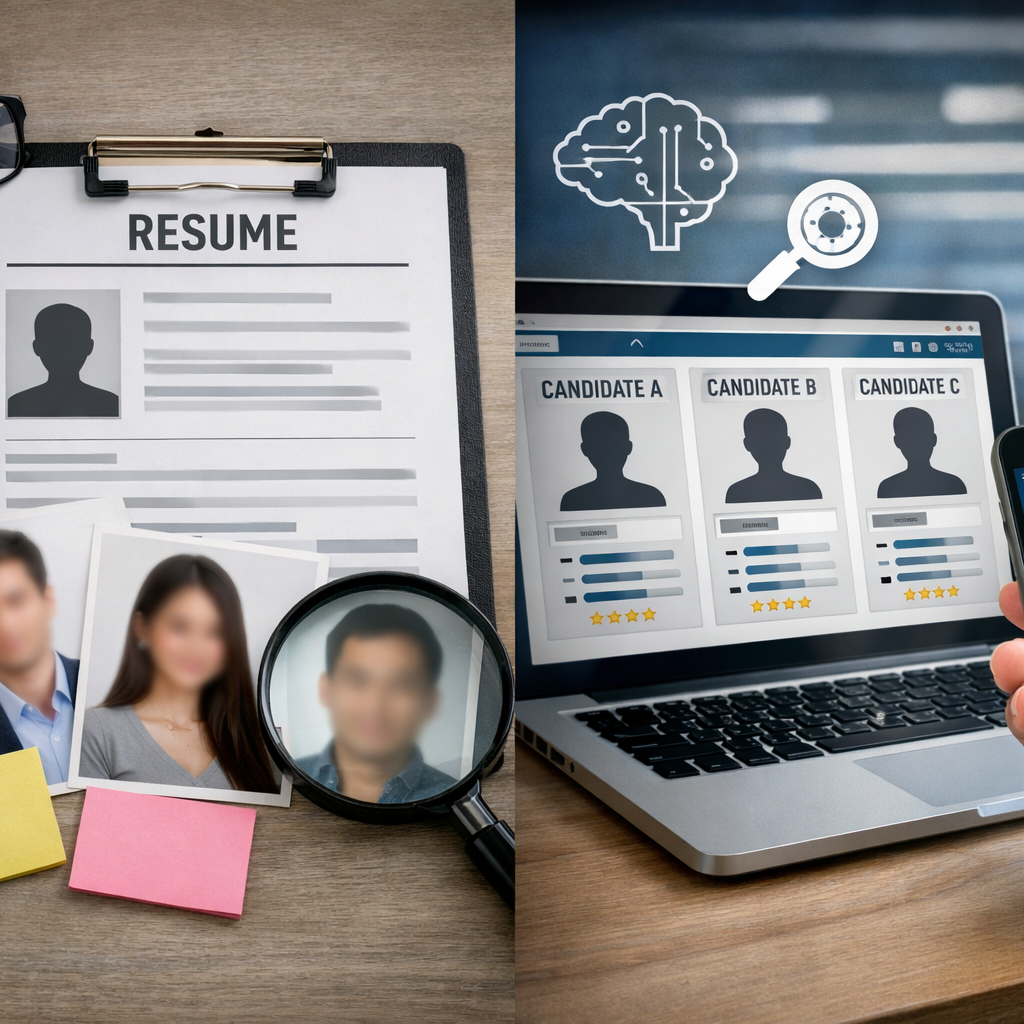
Reducing Bias in Recruiting: Pros & Cons of Blind Hiring and Technology
Key Takeaways
- Blind hiring and technology offer promising methods for reducing bias, enhancing diversity, and improving fairness in recruitment processes.
- Effective balance comes from blending these tools with inclusive practices, ongoing training, and ethical vigilance.
Recruiting the right talent is more challenging than ever, and reducing bias has become a top priority for many organizations. By exploring both blind hiring practices and modern recruiting technology, you can discover practical steps to create fairer and more inclusive hiring processes.
What Is Blind Hiring?
Definition and core principles
Blind hiring is an approach designed to remove personal information from application materials during the initial hiring stages. You strive to focus only on the skills, experience, and qualifications relevant to each role, without being influenced by details such as name, age, gender, ethnicity, or educational background. The core principle is simple: less identifying data leads to fewer opportunities for bias.
Common methods used
To apply blind hiring, you might remove candidates’ names and photographs from résumés. Some organizations go even further by masking educational institutions, addresses, and graduation years. Assessment tasks—such as skill-based tests or practical work samples—are another common method. The goal is to let each applicant’s abilities speak for themselves, giving every candidate an equal opportunity to advance based on merit.
How Does Technology Fight Bias?
Types of recruiting technologies
Recruiting technology comes in many forms. Applicant tracking systems (ATS) help organize candidate data and streamline processes. Skill assessment tools provide objective ways to evaluate applicants. Structured video interview platforms can anonymize answers or focus on competencies instead of appearance. By deploying these types of technologies, you can minimize manual review and standardize candidate experiences.
Role of AI and automation
Artificial intelligence (AI) and automation aim to speed up repetitive hiring tasks while aiming for consistency. AI-based tools might scan résumés for keywords, compare experience objectively, or predict job fit using algorithms. Automation can help ensure each candidate follows the same steps and encounters the same evaluation criteria. These efforts, when thoughtfully applied, seek to reduce potential for subjective judgments and level the playing field.
What Are the Main Biases in Hiring?
Unconscious bias explained
Unconscious bias refers to the implicit preferences and beliefs you hold without even realizing it. In hiring, this means you might instinctively favor or overlook certain candidates based on attributes unrelated to job performance. Factors like names, accents, or schools can trigger these associations, shaping decisions in ways that aren’t obvious but are nonetheless impactful.
Impact on recruitment outcomes
When bias creeps in, applicants from underrepresented groups may be screened out early or not given fair consideration. This reduces the overall talent pool and can limit organizational diversity. The outcome isn’t just about numbers—it affects workplace innovation, decision-making, and broader cultural health in ways that ripple through your team and business results.
Pros of Blind Hiring and Technology
Encourages diverse talent pools
Blind hiring and recruiting technology can be powerful tools for increasing workforce diversity. By reducing exposure to factors that commonly trigger bias, your hiring process opens up to candidates who might otherwise have been overlooked. This leads to a wider and more varied applicant pool, which can foster greater creativity and adaptability across your organization.
Reduces subjectivity in selection
When you rely on structured assessments and objective criteria, you take much of the guesswork and personal preference out of recruitment. Technologies like skill-based screening help ensure that each candidate is evaluated against the same standards. This approach supports more consistent, repeatable outcomes and can help reduce disputes or questions around fairness in your hiring decisions.
Cons of Blind Hiring and Technology
Possible limitations and challenges
Blind hiring isn’t a cure-all. Stripping away personal information sometimes also erases relevant context, such as non-traditional career paths or experience gained outside standard channels. Technology can only reflect the data it’s given—meaning a poorly configured system might miss essential attributes or overlook strong candidates who don’t fit the mold.
Potential for new kinds of bias
Ironically, relying on technology can introduce new forms of bias. Algorithms are built by people, and if those underlying data sets are incomplete or skewed, the results won’t be neutral. AI-driven screening tools may inadvertently reinforce old biases or create unintended barriers for certain groups. That’s why you need continual review and a critical eye when adopting such solutions.
How Can Organizations Balance Both Approaches?
Building inclusive hiring processes
Blending blind hiring techniques with technology requires a thoughtful, human-centered approach. Start by mapping your current process and identifying where bias could influence decisions. Engage multiple team members in reviewing practices, and invest in training to raise awareness around both visible and invisible barriers. By combining human oversight with structured tools, you create guardrails that support equity without sacrificing efficiency.
Best practices for effective implementation
To make the most of blind hiring and recruiting technology, consider these best practices:
- Regularly audit your processes and tools for fairness.
- Supplement technology with skilled human judgment and open feedback loops.
- Offer training on unconscious bias and inclusive interviewing.
- Pilot changes with small groups, then scale based on evidence, not assumptions.
- Collect data on candidate experience to measure progress and adjust as needed.
By treating technology and blind methods as complements rather than fixes, you increase your odds of building a more inclusive recruitment system.
Are There Risks With Relying on Technology?
Ethical considerations
When you use AI or automation in hiring, you have a responsibility to ensure fairness and transparency. It’s vital to understand how algorithms make decisions, and whether they might disadvantage certain applicants. Ethical recruiting means regularly validating your tools, communicating openly with candidates, and being prepared to intervene if outcomes seem skewed.
Avoiding overdependence on tools
No technology, however advanced, should fully replace human insight. Overdependence on automated systems can obscure important context or reduce opportunities for meaningful human connection during recruitment. Routine review, candidate feedback, and ongoing learning help ensure your process stays adaptive—and truly centered on people.